
Do you measure with a skidded stylus? Are you seeing unexpected “dips” in your data? Here’s the irony: those downward features are most likely the result of upward debris on the surface.
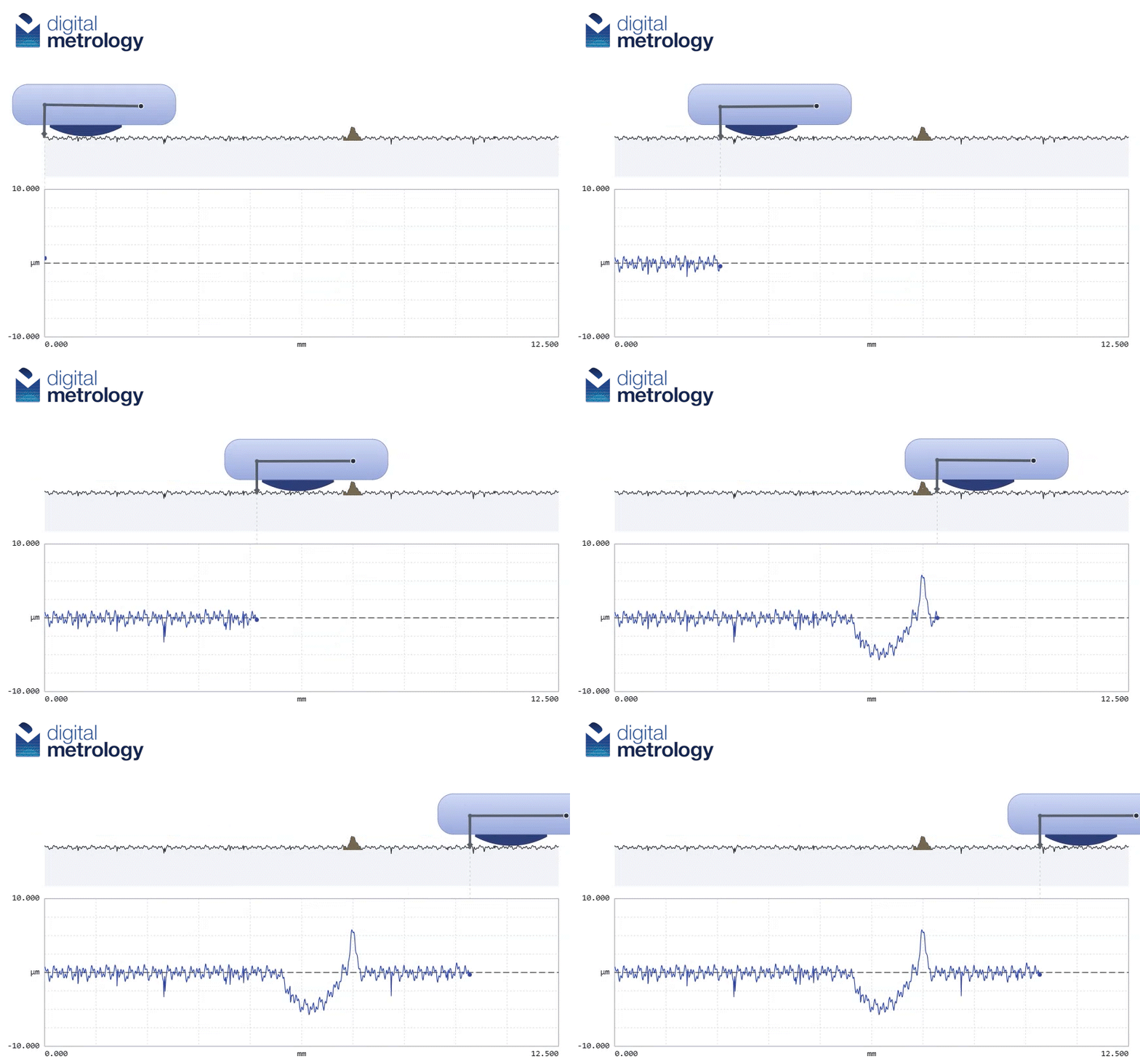
When the skid raises up over debris, the stylus has to reach down to stay on the surface. That stylus motion shows up as a “dip” in the measured profile. If the stylus also contacts the dirt, then the dip will be followed by a sharp peak. It only takes dirt the size of a few microns (approximately a smoke particle) to have this effect!
Dirt-induced shapes like this are not rare! Here are more examples of this common problem:
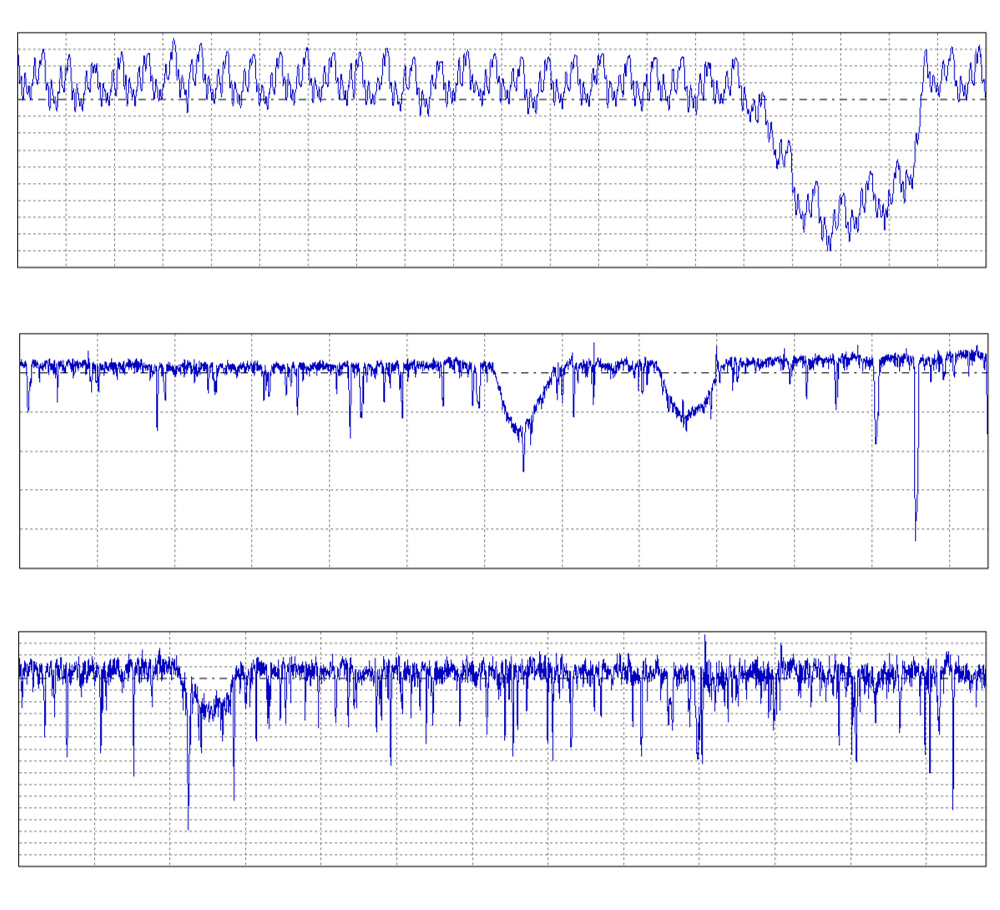
Bear in mind that the skid is typically much wider than the stylus. Most of the time the skid will encounter debris but the stylus may pass beside it, so you’ll see a dip but not an accompanying spike.
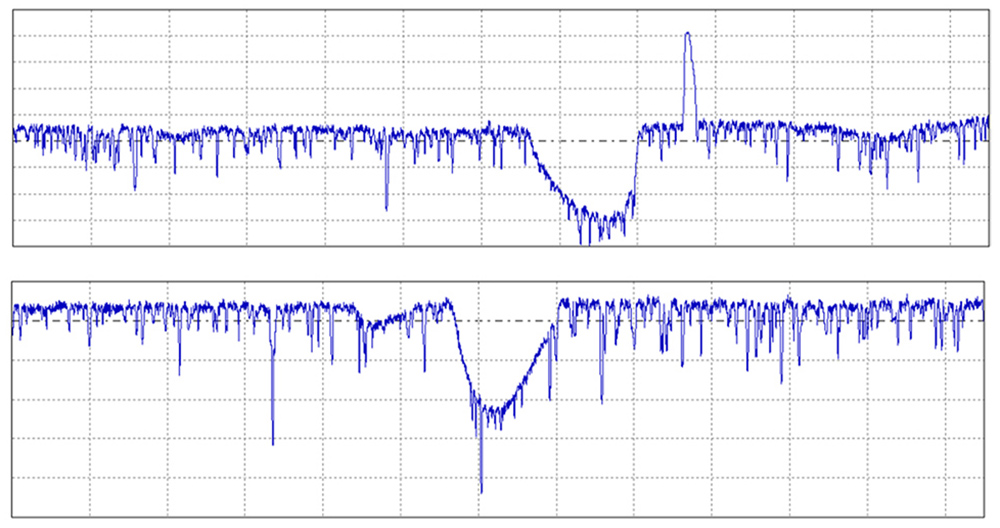
Profiles when the skid and stylus both pass over debris (top) and when the skid passes over debris but the stylus goes around it (bottom).
Seeing the surface helps you diagnose the issue
Say you’re controlling your process based on numerical values from a gage. When you have a dirty surface, you may see changes in the values for parameters like Ra or Rz, but you won’t be able to tell what caused the change. The ability to see the profile in software like OmniSurf or OmniSurf3D can help you diagnose what’s happening.
Better yet: control your skidded roughness gage with TraceBoss and you’ll instantly get a better view of your surface profile and instantly catch issues like this.
What to do when you see unexpected dips in your profile
If you see “dips” in your data, clean the surface to get the most accurate results. Iif the dips disappear after cleaning, you likely have found the cause.
Looking for more information on topics like this? The Surface Texture Answer Book goes into a lot of detail about these types of issues and how to diagnose them!