

OmniSurf3D supports Keyence ZAG, CAG, ZON, and VKx file formats
Keyence VR and VK-X users! Did you know OmniSurf3D texture analysis software can handle Keyence .ZAG, .CAG, .ZON. and .VKx files? Just drag and drop the files into OmniSurf3D to open. Learn more about OmniSurf3D Try it for yourself—download a 10-day trial!

Nagel’s Surface Development Powered by TraceBossPro
What does a leader in honing and microfinishing do? They find new ways to keep leading. Nagel is one of the most well-known names in high volume honing and microfinishing, with a worldwide presence in auto manufacturing, aerospace, defense, and medical applications. Nagel Precision is a world leader in microfinishing and honing, with extensive expertise
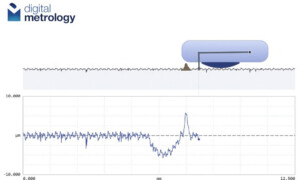
How can “dips” in my profile be caused by dirt?
Do you measure with a skidded stylus? Are you seeing unexpected “dips” in your data? Here’s the irony: those downward features are most likely the result of upward debris on the surface. When the skid raises up over debris, the stylus has to reach down to stay on the surface. That stylus motion shows up as a “dip” in the measured
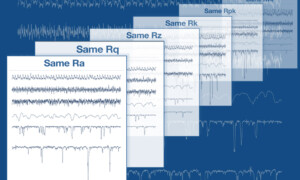
If many surfaces have the same Ra…are other parameters any better?
We’ve all seen a chart like the one below, showing that very different surfaces can have the same average roughness (Ra) values: An Ra reading from your gage can’t tell you which of those surfaces you made! So, does that mean that Ra is “bad” and that other parameters may be better? Let’s have a
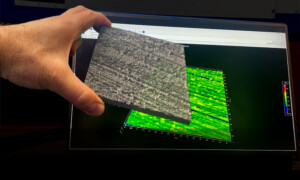
3D printable cylinder bore and piston ring textures
A while ago we showed you how you can print 3D surface textures directly from OmniSurf3D. Over the last couple of years we’ve been using some 3D printed cylinder bore samples at our talks and teaching sessions… …and a lot of you requested files so that you could print your own. Well…we heard you, and
Texture Parameter Videos
Surface texture parameters tell so much about a surface and how it might perform. But just looking at the equations can’t tell us everything we need to know about how to interpret the values. This new, free series of videos helps explain the meaning of dozens of common surface texture parameters in a simple and graphical way.
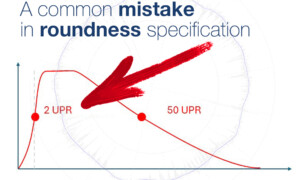
A common mistake in roundness specification
Is it really 2–50 UPR? Don’t be so sure! Whether rolling, sliding, sealing, or simply fitting together, round geometries are everywhere. And controlling the shape of these “ideally round” surfaces is critical to their performance. Historically, roundness has been specified and controlled as what can be described as “waviness around a circle.” Higher frequencies are
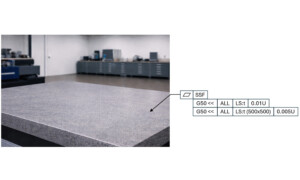
ASME Y14.49: Part 3: The Surface Plate Problem
Defaults in standards rarely apply perfectly in all situations. That’s the case with ASME Y14.5-2018 (Section 4.1, Fundamental Rule ‘S’), which states: Unless otherwise specified, elements of a surface include surface texture and flaws (e.g., burrs and scratches). All elements of a surface shall be within the applicable specified tolerance zone boundaries. But what if
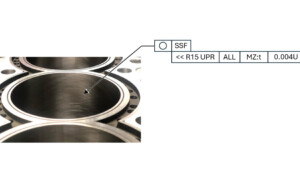
ASME Y14.49: The Cylinder Bore – Piston Ring Interface
This is the second Case Study in our series on the new ASME Y14.49 supplemental standard. An engine cylinder bore is one of the most critical surfaces/geometries in the world. Courtesy QMP Racing The interface between the bores and the mating piston rings is essential to 90% of the world’s transportation…and is responsible for approximately